Recyclable threads
What items can we take?
If it has a hole, rip, stain or cannot be worn again, but is clean and washed we can take it
Damaged or unwearable clothes
Can be holey, stained or torn but clean
Underwear
Any quality, size, and gender but clean
Socks
All quality, holes, stains, and tears but clean
Blankets
Any quality but clean
Towels
All quality but clean
Linens
All quality but clean
Fiber Insulation
Does not need to be washed, but please remove any plastic sleeves. If dirty, please dispose of this item.
Fabric scraps
Please remove any type of metal, like straight pins or safety pins
What isn’t in this category?
Wet, moldy, mildewed, damaged, or chemically contaminated items

Shoes
Please no muddy, dirty or broken shoes
Dirty or Pet Related Items
Damaged, dirty, with pet hair
Crocheted Items
If able to be used again, place in the clear Rewearable clothing and shoes bag.
Pillows
This includes feather, foam, gel and regular stuffing
Accessories
if in good, rewearable condition place this into the clear plastic Rewearable Clothes and Shoes bag!
Recyclable threads.
Mixed fibers complicate the separation process necessary for reuse and recycling. Separating out textiles meant for recycling can help more textiles reach their next highest use.
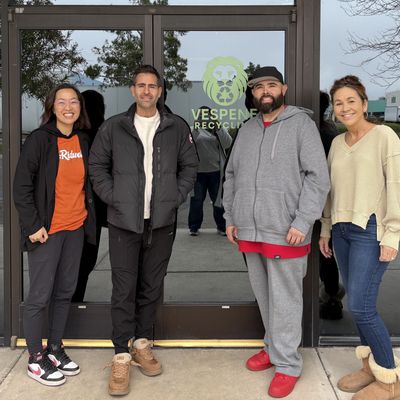
Partnering with Vespene Recycling
Vespene Recycling is a Las Vegas, Nevada–based textile recycling company that specializes in brand protection & processing post-consumer mixed textiles. Vespene's goal is to convert worn-out clothing and other non-reusable textiles into new products. Vespene actively engages with the Texas Tech Textile Circularity Institute, Cotton Incorporated, Canopy, and Fortune 100 partners to develop economically viable pathways to new products.
Vespene receives recyclable textiles collected from Ridwell members, sorting and processing them into fiber for reuse in new products. This keeps more textiles out of landfills and gives them a productive next life.
Partnering with Leigh Fibers
For more than a century, Leigh Fibers has been involved in textile recycling and converting discarded materials into usable resources. As a major textile recycler in North America, Leigh Fiber processes hundreds of millions of pounds of used clothing and textile waste annually. This work helps reduce the amount of clothing in landfills by supporting reuse, repurposing, and responsible recycling practices for textiles. The recyclable textiles you provide are given a second life as different insulation products such as automotive padding and punching bag stuffing.
Join the movement to build a future without waste.